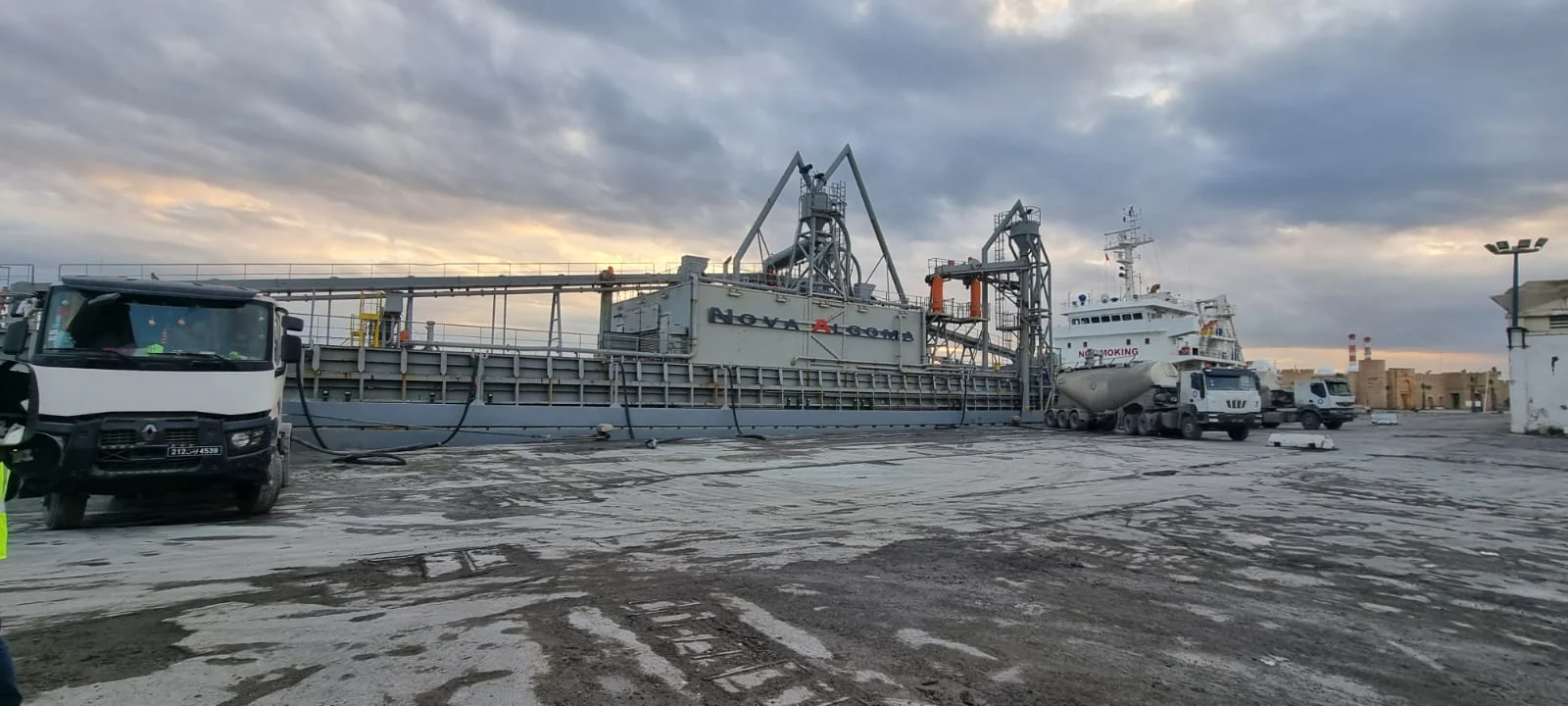
Importing into Zambia from Tunisia: transit ports, ZRA pre-clearance and ZCSA standards
MWB TRADING offers importers, distributors, contractors and mining companies in Zambia products from Tunisia: cables and equipment for power networks, wiring devices and protection, LED lighting, pipes and fittings for water, as well as generators and pumps. Goods leave from Radès (Tunis) or Sfax; our offers are made delivered to the transit port, Dar es Salaam, Durban or Walvis Bay, on CFR or CIF terms, in full 20 or 40-foot containers or as groupage for small volumes.
This guide sets out the verified points for importing into Zambia, a landlocked country: the corridors linking the transit ports to the border posts, the pre-clearance required by the Zambia Revenue Authority in ASYCUDA World, the compulsory standards enforced by the Zambia Compulsory Standards Agency, the COMESA free trade area, and what to state in your enquiry.
most used transit ports, with Walvis Bay; goods then enter Zambia by road, or by rail from Dar es Salaam
ZRA pre-clearance
since May 2024, the customs declaration is registered in ASYCUDA World before the goods reach the border
ZCSA compulsory standards
checked at entry by the Zambia Compulsory Standards Agency; they cover cables for fixed installations and plugs, among others
COMESA
Tunisia is among Zambia’s partners in the COMESA free trade area: preference possible with a COMESA certificate of origin; Tunisia is not a SADC member
Radès · Sfax
our departure ports in Tunisia
CFR · CIF
offers made delivered to the transit port, in 20 or 40-foot containers or as groupage; FOB on request
Sources: US Department of Commerce country guide (March 2026), Zambian press on the Zambia Revenue Authority (pre-clearance, 2024), the Zambia Compulsory Standards Agency (March and September 2025) and TAZARA (January 2026), Zambian customs regulations (COMESA-EAC-SADC non-tariff barriers portal), TradeMark Africa (December 2025), GTAI (November 2025), tralac (July 2026), COMESA Secretariat (2020), SADC, lists of countries requiring a cargo tracking note (Maersk; GetCTN, February 2026). Checked in October 2026; to be confirmed with your freight forwarder before each shipment.
PRODUCT RANGES
The ranges we offer for Zambia
These ranges from the MWB catalogue are available from Tunisia for delivery to Zambia. References, required standards and quantities are confirmed in each offer, with the technical data sheets needed for the conformity check at entry.
Electrical cables and wires
Low and medium-voltage power cables, control cables, building wires and cables. In Zambia, cables for fixed installations are covered by a compulsory standard enforced by ZCSA: state the cross-sections in mm², the drum lengths and the required standard.
MV/LV distribution transformers, packaged substations and medium-voltage switchgear for networks, industrial sites and mines. State the rating, primary and secondary voltages and the type of installation.
Switches, sockets and wiring devices, power contactors, earthing equipment and surge arresters. Plugs, socket outlets and adaptors are covered by a compulsory standard in Zambia: state the plug type and the required standard.
HDPE and PVC pressure pipes for water supply and irrigation, PVC drainage pipes, PPR pipes and fittings for plumbing. State the diameters, pressure ratings and lengths.
Generator sets, water pumps and motor pumps for construction sites, farms and remote sites, with the technical data sheet of each model and the voltage required on site.
Importing through the Dar es Salaam, Durban and Walvis Bay corridors
Ports and routes
Zambia has no access to the sea. From Tunisia, containers arrive, with transhipment depending on the shipping line, at a transit port: Dar es Salaam (Tanzania), Durban (South Africa) and Walvis Bay (Namibia) are the most used, and Beira and Nacala (Mozambique) also serve the country. Almost all imports then enter Zambia by road, through the border posts of Nakonde from Tanzania, Chirundu or Livingstone from Zimbabwe, Kazungula from Botswana and Sesheke from Namibia. The TAZARA railway also links Dar es Salaam to Kapiri Mposhi, in the centre of the country, where a dry port is planned; a rail link to the Angolan port of Lobito is in the pipeline. Our offers are made delivered to the transit port; onward transport to Lusaka, the Copperbelt or the delivery point is arranged with your freight forwarder.
Import documents
Since 1 May 2024, the Zambia Revenue Authority (ZRA) has required pre-clearance of commercial goods: the customs declaration is registered and processed in ASYCUDA World, by the clearing agent or the importer, before the goods reach the border (at least five days before, according to the ZRA notice). Without proof of pre-clearance, a truck is not allowed into the customs area; on arrival, only verification remains. The declaration carries the importer’s taxpayer identification number (TPIN) and is supported by the bill of lading, the commercial invoice, the import declaration form for statistical purposes and, to claim a preference, the COMESA certificate of origin. Some goods, such as agricultural and food products, medicines or firearms, need prior certification. In December 2025, ZRA signed an agreement with UNCTAD to upgrade ASYCUDA World and its single window. MWB prepares the commercial invoice, packing list, certificate of origin and technical data sheets for the shipment.
Inspection and conformity
The Zambia Compulsory Standards Agency (ZCSA) enforces compulsory standards on imported and locally made products alike: at the main points of entry, its inspectors check documents and products, with sampling and analysis where needed. Regulated products include cables for fixed installations, plugs, socket outlets and adaptors, and household electrical appliances; the list was extended on 1 October 2025 to cover, among others, precast concrete blocks and batteries and charge controllers for solar installations. A non-compliant product can be withdrawn from the market or destroyed. The Zambia Bureau of Standards (ZABS) develops national standards; Zambia accepts products that comply with ISO and IEC standards, as well as test certificates from accredited laboratories. State the standard required for your project: the technical data sheets are attached to the offer.
What to specify
State the delivery city in Zambia and the preferred transit port, Dar es Salaam, Durban or Walvis Bay, with the references, quantities and required standards. Say whether several product families can share the same container, whether you want a CFR, CIF or FOB offer, and who arranges transport from the port and pre-clearance with ZRA.
Availability, transport, lead times and documents are confirmed in each offer.
YOUR ENQUIRY FOR ZAMBIA
Let’s prepare your offer for Zambia.
State your products, quantities, delivery city and preferred transit port. Zambia is already selected; you can change it.
Your questions about importing into Zambia from Tunisia
Is a cargo tracking note required for Zambia?
Zambia does not appear on the published lists of countries requiring an electronic cargo tracking note (ECTN or BESC), nor do Tanzania, South Africa, Namibia or Mozambique. The key formality is pre-clearance: since May 2024, the declaration must be registered in ASYCUDA World before the goods reach the border. Your freight forwarder confirms the current procedure before loading.
Are products checked on entry into Zambia?
Yes, for products subject to a compulsory standard: the Zambia Compulsory Standards Agency (ZCSA) checks documents and products at the main points of entry, with sampling and analysis where needed. Cables for fixed installations, plugs and adaptors, and household electrical appliances are among the regulated products. Test certificates from accredited laboratories are accepted; MWB prepares the commercial invoice, packing list, certificate of origin and technical data sheets for the shipment.
Do Tunisian products qualify for a tariff preference?
Without a preference, Zambia applies duties of 0 to 5% on equipment and raw materials, 15% on intermediate goods and 25% on finished goods, calculated on the CIF value, plus 16% import VAT. Tunisia is among Zambia’s partners in the COMESA free trade area: with a COMESA certificate of origin, issued in Tunisia by customs or a chamber of commerce, products that meet the rules of origin can enter free of customs duty, while VAT remains payable. Tunisia is not a SADC member. Ask your freight forwarder to confirm that the preference applies before ordering.
Which port should the goods go through?
Through Dar es Salaam, Durban or Walvis Bay, the most used transit ports; Beira and Nacala, in Mozambique, also serve Zambia. According to the US Department of Commerce (March 2026), transport from these three ports to Lusaka takes about two weeks. Our offers are made delivered to the transit port, on CFR or CIF terms, from Radès (Tunis) or Sfax; FOB departure is possible on request.
Can you group several products or ship small quantities?
Yes: several product families can be grouped in the same 20 or 40-foot container, and small volumes travel as groupage. For an urgent need for small quantities, air freight from Tunis-Carthage is possible on request.