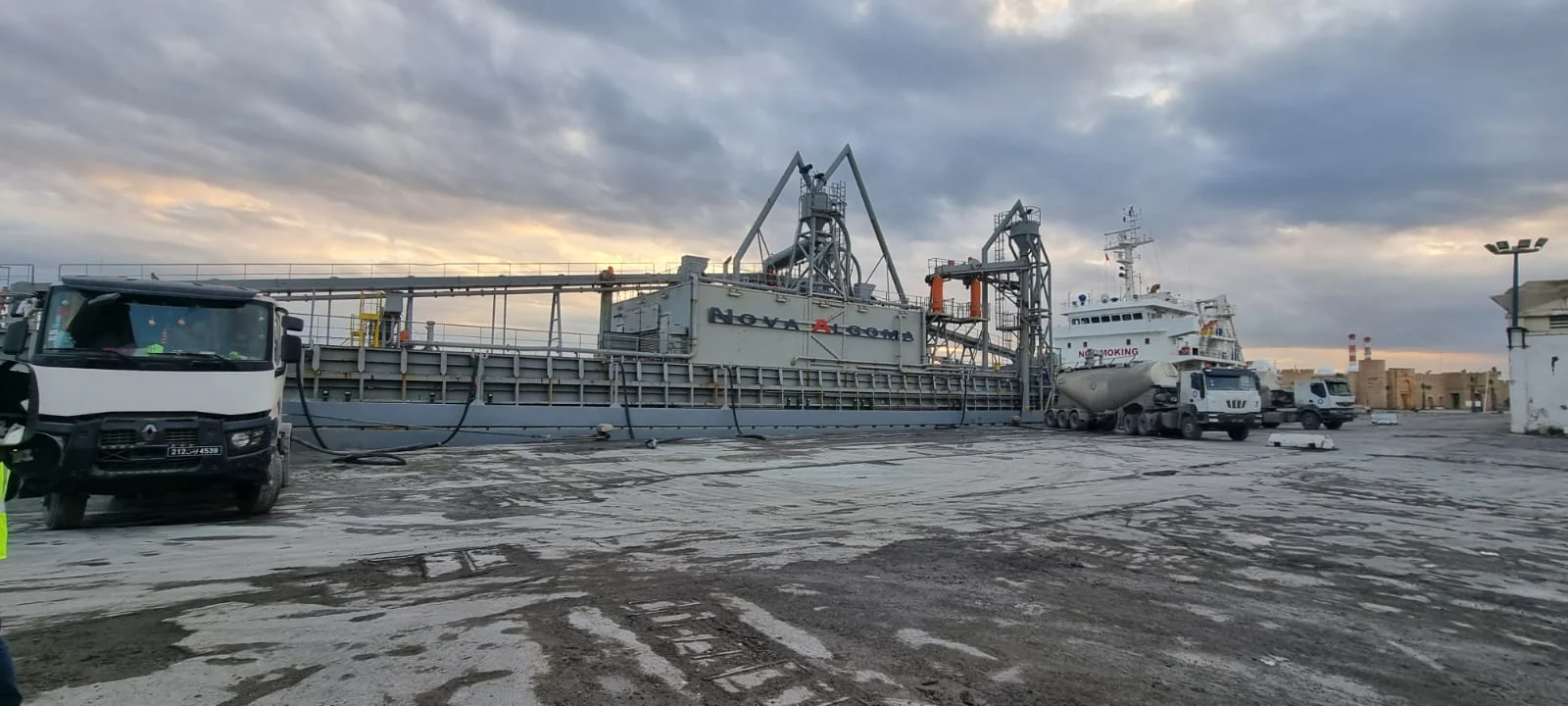
Importing into Kenya from Tunisia: ACD, KEBS inspection and the port of Mombasa
MWB TRADING offers importers, distributors and contractors in Kenya products from Tunisia for power networks, buildings and water supply: cables and wires, transformers and substations, pipes and fittings, lighting, white cement and plaster, and industrial raw materials. Goods leave from Radès (Tunis) or Sfax, and our offers are made delivered to the port of Mombasa, on CFR or CIF terms.
This guide sets out the verified points for importing into Kenya: the advance cargo declaration (ACD) required for containers since August 2026, the certificate of origin mandatory since July 2025, the Kenya Bureau of Standards (KEBS) inspection at the port of entry for goods from Tunisia, the East African Community (EAC) common external tariff and the possible COMESA preference, and what to state in your enquiry.
Kenya’s ports of entry; Mombasa is linked by rail to the inland container depots of Nairobi and Naivasha
ACD
advance cargo declaration required since 3 August 2026 for every container bound for Kenya; its code appears on the bill of lading
KEBS inspection at port
Tunisia is outside the PVoC programme in the cycle opened in February 2026: KEBS checks goods on arrival, then issues the certificate of conformity
Certificate of origin
mandatory for all imports since 1 July 2025, issued in the country of export
Radès · Sfax
our departure ports in Tunisia
20 · 40 ft
full 20 or 40-foot containers, or groupage for small volumes
Sources: Kenya Revenue Authority notices (certificate of origin, September 2025; advance cargo declaration, July 2026; 2026 Finance Act) and Maersk carrier advisory (July 2026); KEBS PVoC programme manual and notice (February 2026); Germany Trade & Invest customs guides (April 2026); Kenya’s fees and levies law (January 2026 version); KRA, Kenya Ports Authority and Kenya News Agency (January, February and August 2026); COMESA Secretariat (2020). Checked in October 2026; to be confirmed with your freight forwarder before each shipment.
PRODUCT RANGES
The ranges we offer for Kenya
These ranges from the MWB catalogue are offered from Tunisia for delivery to the port of Mombasa. References, required standards and quantities are confirmed in each offer; several product families can be grouped in the same container.
Electrical cables and wires
Low and medium-voltage power cables, control cables, building wires and cables. State the cross-sections, drum lengths and the standard required for your project.
MV/LV distribution transformers, packaged substations and surge arresters. State the rating, primary and secondary voltages and the type of installation.
HDPE and PVC pressure pipes for water supply, PVC drainage pipes, PPR pipes and fittings for plumbing. State the diameters, pressure ratings and lengths.
Calcium carbonate, raw materials for paints, polymers and industrial chemicals for manufacturers. State the quality, grade or particle size and the packaging.
Containers leave from Radès (Tunis) or Sfax, with transhipment depending on the shipping line, for Mombasa, Kenya’s main port and a regional gateway, run by the Kenya Ports Authority. Further north, the port of Lamu receives regular services from several lines, and in January 2026 KRA and the port authority agreed to route more transhipment cargo there. From Mombasa, the railway links the port to the inland container depots of Nairobi (Embakasi) and Naivasha: a container can be moved there on a through bill of lading and cleared there. Naivasha is prioritised for transit cargo to Uganda, Rwanda, DR Congo and South Sudan.
Import documents
Since 3 August 2026, every container bound for a Kenyan port must be covered by an advance cargo declaration (ACD) of the Kenya Revenue Authority (KRA): the exporter or its freight forwarder obtains the code at loading, on the KRA platform, with the draft bill of lading, commercial invoice, freight invoice and export declaration, and the code is endorsed on the bill of lading. Since 1 July 2025, all imports must be accompanied by a certificate of origin issued in the country of export; since 1 September 2026, the importer must also obtain and keep the export declaration. On the buyer’s side, the importer is registered with KRA and obtains a unique consignment reference (UCR) for each shipment in the national single window; the electronic customs declaration is lodged by a KRA-licensed customs agent, or by the importer if it is licensed itself, with the import declaration form (IDF), the commercial invoice and packing list in English, and the bill of lading. If no declaration is lodged within 21 days of arrival, the goods are placed in a customs warehouse at the owner’s expense.
Inspection and conformity
The Kenya Bureau of Standards (KEBS) checks that imports conform to Kenyan standards. In the cycle of the pre-export verification of conformity programme (PVoC) opened in February 2026, Tunisia is among the countries not covered: goods from Tunisia are inspected by KEBS at the port of entry, with testing where needed, and then receive the certificate of conformity required for clearance. This destination inspection carries a fee based on the customs value, within limits set by KEBS, plus any testing. KEBS asks for a free sale certificate from the exporter and recommends testing products before shipment in an ISO/IEC 17025 accredited laboratory, against the Kenyan standards the importer obtains from KEBS. Labels must be in English, with Swahili possible as a second language, and show the manufacturer, brand and country of origin. For cables, electrical equipment and cement, we attach the technical data sheets to our offer.
What to specify
References and quantities, Kenyan standards or specifications required, packaging and labelling, available test reports, port of arrival (Mombasa or Lamu) or inland depot of destination (Nairobi, Naivasha), the freight forwarder handling the ACD and clearance, and the Incoterm: CFR or CIF Mombasa, or FOB.
Availability, transport, lead times and documents are confirmed in each offer.
YOUR ENQUIRY FOR KENYA
Let’s prepare your offer for Mombasa.
State your products, quantities and delivery point. Kenya is already selected; you can change it.
Your questions about importing into Kenya from Tunisia
Is a certificate of conformity needed before shipment from Tunisia?
Not under PVoC: in the cycle opened in February 2026, Tunisia is among the countries not covered by pre-export verification. The goods are inspected by KEBS at the port of entry, which issues the certificate of conformity required for clearance; a fee based on the customs value applies, plus any testing. Plan for the exporter’s free sale certificate and, where possible, test reports from an accredited laboratory.
What is the ACD and who obtains it?
It is the Kenya Revenue Authority’s advance cargo declaration, required since 3 August 2026 for every container bound for a Kenyan port. The exporter or its freight forwarder obtains it at loading by uploading the draft bill of lading, commercial invoice, freight invoice and export declaration; the code must appear on the bill of lading. Otherwise, the importer may face customs fines.
Can Tunisian products benefit from a COMESA preference?
Kenya applies the COMESA free trade area, which Tunisia has taken part in since 2020: the COMESA Secretariat then listed Kenya among the countries to which Tunisia can export without customs duties, with the COMESA certificate of origin. We prepare the certificate of origin; have your freight forwarder confirm that the preference is granted to your product on arrival. It covers customs duties; VAT and other import levies should be checked with your forwarder.
Which duties and taxes should be expected on import?
Without a preference, goods pay the EAC common external tariff, at 0, 10, 25 or 35% depending on the product; the 35% rate applies in particular to ceramics, iron and steel. On top of this come the import declaration fee (2.5%) and the railway development levy (2%), both calculated on the customs value, then VAT at 16%. Your freight forwarder confirms the rates according to the tariff code of each product.
Can you group several products or ship small quantities?
Yes. Several product families, such as cables, pipes and luminaires, can be grouped in the same 20 or 40-foot container. Small volumes travel as groupage, and urgent small quantities can be sent by air from Tunis-Carthage on request. Our offers are made on CFR or CIF terms, delivered to the port of Mombasa, or FOB; we prepare the commercial invoice, packing list, certificate of origin and technical data sheets.