Importing into the Gambia from Tunisia: port of Banjul, ECTN and customs clearance
MWB TRADING offers importers, distributors and companies in the Gambia products from Tunisia for buildings, power networks and water: electrical cables and wires, transformers, LED lighting, pipes and fittings, tiles and sanitaryware, cements and plasters. Goods leave from Radès (Tunis) or Sfax; our offers are made delivered to the port of Banjul, on CFR or CIF terms, in full 20 or 40-foot containers, or as groupage for small volumes.
This guide sets out the verified points for importing into the Gambia: the constraints of the port of Banjul, the electronic cargo tracking note (ECTN) reintroduced in 2026, customs clearance with the Gambia Revenue Authority, the ECOWAS common external tariff, checks on electrical products and transit to neighbouring countries. It also lists what to state in your enquiry.
the country’s main seaport, on the Gambia River estuary; access channel with a minimum depth of 9 m
ECTN
electronic cargo tracking note reintroduced from 5 January 2026; number to be obtained before arrival at Banjul, procedure to be confirmed
GSB standards
tighter checks on imported electrical products, announced in August 2026 by the Gambia Standards Bureau on the basis of IEC standards
ECOWAS CET
applied since 1 January 2017: duties from 0 to 35% across five product categories
Radès · Sfax
our departure ports in Tunisia
20 · 40 ft
full containers, or groupage for small volumes; offers on CFR or CIF terms to Banjul
Sources: Gambia Revenue Authority (customs FAQs, 2026), Gambian press on the ECTN (March and April 2026) and on the Gambia Standards Bureau (August 2026), Gambia Ports Authority (December 2025), Logistics Cluster logistics capacity assessment for the Gambia, Maersk advisory on the cargo tracking note (May 2023). Checked in October 2026; to be confirmed with your freight forwarder before each shipment.
PRODUCT RANGES
The ranges we offer for the Gambia
These ranges from the MWB catalogue are available from Tunisia for delivery to the port of Banjul. References, required standards and quantities are confirmed in each offer; several product families can be grouped in the same container.
Electrical cables and wires
Low and medium-voltage power cables, control cables, building wires and cables. State the cross-sections, lengths and the IEC standard or specification required.
LED lamps and luminaires, street lights for roads and buildings, with the technical data sheet of each model, useful for the checks on electrical products.
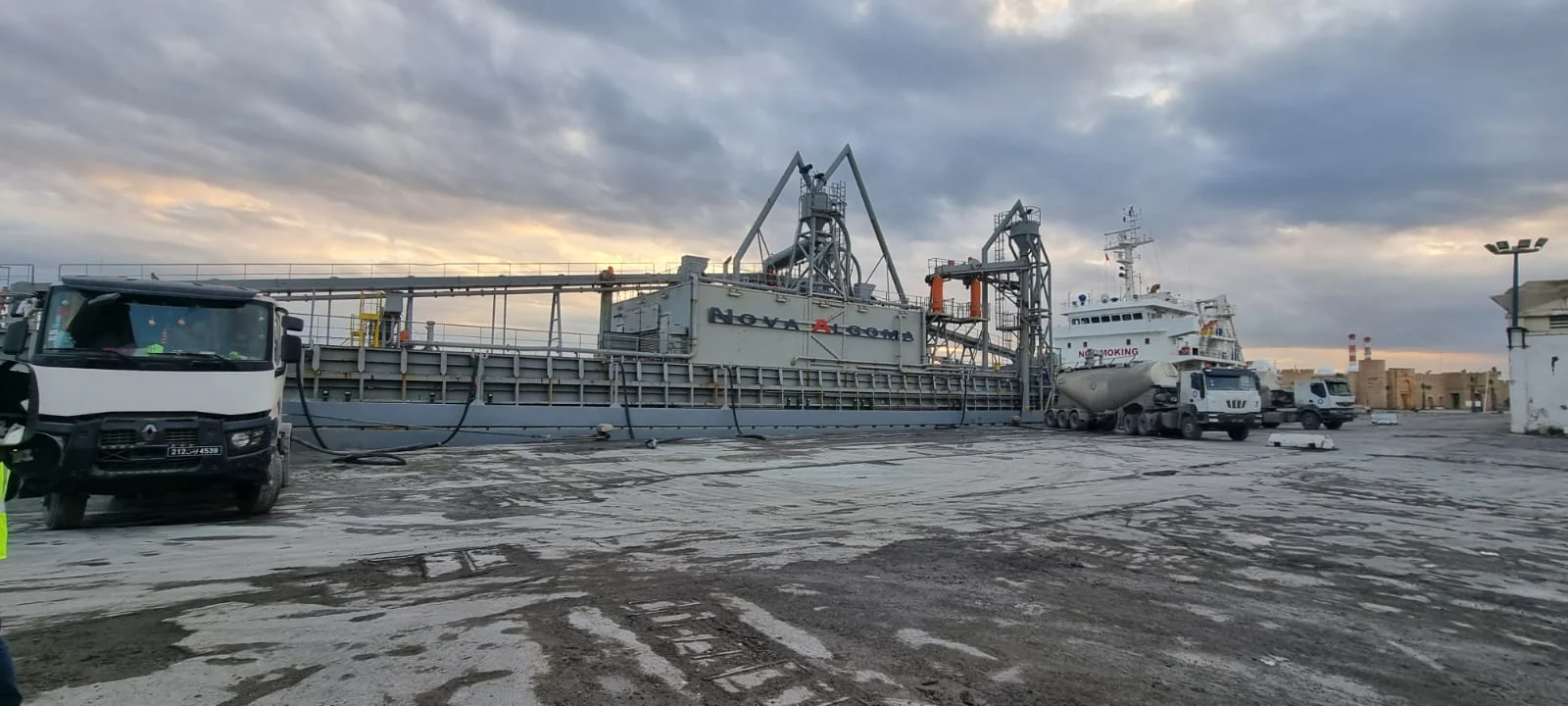
The port of Banjul, under the Gambia Ports Authority, lies on the Gambia River estuary. A sandbar limits its approach channel: the minimum depth is 9 m, vessels drawing up to 9 m are advised to enter on the flood tide, and silting calls for ever more frequent dredging. In December 2025, the port authority launched a tender to deepen the critical section from 9 to 11 m. The port has periods of congestion, especially in peak season. Containers leave from Radès (Tunis) or Sfax, with transhipment depending on the shipping line; the route is confirmed in each offer.
Import documents
Introduced in May 2023 and then suspended, the electronic cargo tracking note (ECTN, also called CTN) was reintroduced with effect from 5 January 2026, after government approval; it is run by a concession company. In 2023, its number had to be obtained in advance, validated at the port of loading and shown on the bill of lading, otherwise containers stayed on board: confirm the current procedure with your freight forwarder. For customs, the declaration comes with an invoice showing cost, insurance and freight, the bill of lading, certificate of origin, packing list, any licences or certificates required and the importer’s tax identification number.
Inspection and conformity
Goods remain under customs control until cleared: customs check the declaration and documents, collect duties and taxes, then release the goods. The declaration is lodged on ASYCUDA World by a licensed clearing agent. Goods that the standards bureau certifies as non-compliant are prohibited imports; in August 2026, the Gambia Standards Bureau announced tighter checks on electrical products, based on the IEC standards adopted by the country, with the option of relying on internationally recognised test reports and certificates.
Transit to neighbouring countries
Goods in transit are exempt from duties and taxes if they are presented intact, under customs seal, at the office of destination. The bill of lading is marked “In Transit” to the country of destination; the transit declaration is lodged on ASYCUDA World with a guarantee, and the operation must be completed within 15 working days, unless customs grant an extension. In February 2026, an area of the port of Banjul was set aside for transit cargo bound for Mali.
What to specify
References and quantities, standards or certificates required for electrical products, packaging, delivery point in the Gambia or final destination country for transit, and preferred Incoterm: CFR or CIF to Banjul, or FOB on request.
Availability, transport, lead times and documents are confirmed in each offer.
YOUR ENQUIRY FOR THE GAMBIA
Let’s prepare your offer for Banjul.
State your products, quantities and delivery point. The Gambia is already selected; you can change it.
Your questions about importing into the Gambia from Tunisia
Is an ECTN needed for Banjul?
Yes, according to information published in 2026: introduced in 2023 and then suspended, the electronic cargo tracking note was reintroduced with effect from 5 January 2026. Its number, one per bill of lading, is obtained before arrival at Banjul. The scheme has changed several times since 2023: confirm the procedure with your freight forwarder before each shipment.
Which customs duties apply?
Since 1 January 2017, the Gambia has applied the ECOWAS common external tariff: duties of 0, 5, 10, 20 or 35% depending on the product category, plus ECOWAS and African Union levies, a processing fee and import VAT. The Gambia has submitted its AfCFTA tariff offers through ECOWAS, but no preference for Tunisian origin has been confirmed to date: check with your freight forwarder.
Are electrical products checked?
Increasingly so: in August 2026, the Gambia Standards Bureau announced tighter checks to keep non-compliant electrical products out, based on IEC standards, and goods it certifies as non-compliant are prohibited imports. The technical data sheets are attached to our offer; if test reports or certificates are required, say so in your enquiry.
Can goods transit through Banjul to a neighbouring country?
Yes. Under customs seal, with a bill of lading marked “In Transit” and a transit declaration on ASYCUDA World, the goods are exempt from Gambian duties and taxes; the operation must be completed within 15 working days. An area of the port has been set aside for Malian cargo since February 2026. State the final destination country: the route is assessed in the offer.
Can you group several products or ship a small volume?
Yes. Several product families can be grouped in the same 20 or 40-foot container, and small volumes can travel as sea groupage. For urgent small quantities, air freight from Tunis-Carthage can be considered on request.