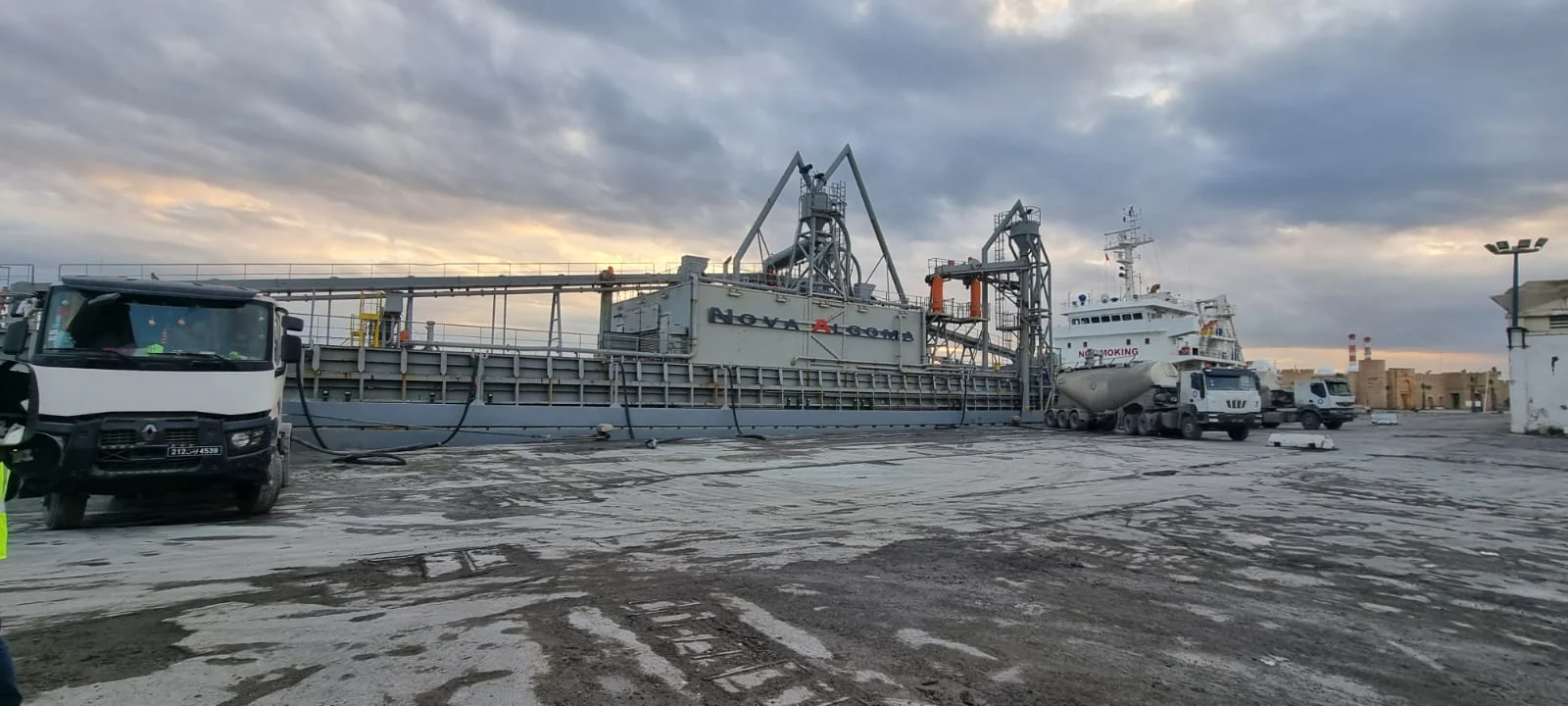
Importing into Uganda from Tunisia: the Mombasa corridor and the UNBS certificate
MWB TRADING offers importers, distributors and companies in Uganda products from Tunisia: cables and power network equipment, protection and earthing equipment, LED lighting, water pipes and fittings, and industrial raw materials. Goods leave from Radès (Tunis) or Sfax; our offers are made delivered to the transit port, Mombasa or Dar es Salaam, on CFR or CIF terms, in full 20 or 40-foot containers or as groupage for small volumes.
This guide sets out the verified points for importing into Uganda, a landlocked country: the corridors linking Mombasa and Dar es Salaam to Kampala, the declaration to the Uganda Revenue Authority within the EAC Single Customs Territory, the certificate of conformity required before shipment for regulated products, the common external tariff and the possible COMESA preference, and what to include in your enquiry.
transit ports of the Northern and Central corridors; Kampala is then reached by road, via Malaba or Mutukula
Single Customs Territory
declaration to URA through the electronic single window; duties paid to Uganda at the port of entry, transit under electronic seals
Certificate of conformity
required for every consignment of regulated products, issued before shipment under the UNBS PVoC programme; otherwise a penalty of 15% of the CIF value
EAC · COMESA
EAC common external tariff, from 0 to 35%; COMESA rates possible for Tunisian origin, granted for 2025-2026, renewal to be confirmed
Radès · Sfax
our departure ports in Tunisia
CFR · CIF
offers delivered to Mombasa or Dar es Salaam, in 20 or 40-foot containers or as groupage; FOB on request
Sources: Ugandan press on the corridors (October 2026) and on the UNBS portal (August 2026), UNBS PVoC programme datasheets (SGS, July 2025; Bureau Veritas, July 2024) and UNBS brochure, country guides from GTAI (December 2024) and the US International Trade Administration (December 2025), Kenya Revenue Authority (Single Customs Territory, 2026; electronic cargo tracking, 2018) and Kenyan press (June 2026), EAC Gazette (June 2025) and tax alerts on the July 2026 measures, COMESA Secretariat (2020, 2021 and 2026), Logistics Cluster logistics assessment. Checked in October 2026; to be confirmed with your freight forwarder before each shipment.
PRODUCT RANGES
The ranges we offer for Uganda
These ranges from the MWB catalogue are available from Tunisia for delivery to Uganda. References, required standards and quantities are confirmed in each offer; for regulated products, plan the certificate of conformity before shipment.
Electrical cables and wires
Low and medium-voltage power cables, control cables, building wires and cables. State the cross-sections in mm², drum lengths and the standard required for your project.
MV/LV distribution transformers, prefabricated substations and medium-voltage switchgear. State the rating, primary and secondary voltages and the type of installation.
LED lamps, luminaires and street lights for roads, buildings and sites, with the technical data sheet of each model; packaging markings must include English.
HDPE and PVC pressure pipes for water supply, PVC drainage pipes, PPR pipes and fittings for plumbing. State the diameters, pressure ratings and lengths.
Calcium carbonate, raw materials for paints and detergents, and polymers for manufacturers based in Uganda. State the grade, particle size and packaging; raw materials for manufacturing can be exempted from the certificate of conformity with an exemption letter.
Importing through the Mombasa and Dar es Salaam corridors
Ports and routes
Uganda has no access to the sea. From Tunisia, containers arrive, with transhipment depending on the shipping line, at Mombasa, in Kenya, or at Dar es Salaam, in Tanzania. Mombasa remains the main route for Ugandan cargo: the Northern Corridor road reaches Kampala via the Malaba border. On the Central Corridor, the road from Dar es Salaam crosses at the Mutukula one-stop border post; since January 2025, a vessel has also linked Mwanza to Port Bell, near Kampala, across Lake Victoria. In Kenya, construction of the railway extension towards Malaba began in July 2026. Our offers are made delivered to the transit port; onward transport to Kampala is arranged with your freight forwarder.
Import documents
The importer, registered with the Uganda Revenue Authority (URA), declares the goods through the Uganda Electronic Single Window (UESW), linked to the ASYCUDA World customs system; using a URA-licensed customs agent is mandatory. The file includes the import declaration form, commercial invoice, packing list, bill of lading, certificate of origin and, for regulated products, the certificate of conformity; documents are in English. Within the EAC Single Customs Territory, the declaration is lodged with URA and duties are paid to Uganda while the goods are at the port of entry; they leave the port once URA releases them, then travel under electronic seals, monitored by the regional electronic cargo tracking system, to their destination. MWB prepares the commercial invoice, packing list, certificate of origin and technical data sheets for the shipment.
Inspection and conformity
The Pre-Export Verification of Conformity (PVoC) programme of the Uganda National Bureau of Standards (UNBS) covers products subject to compulsory Uganda standards, including electrical and electronic equipment, chemicals and construction materials. Every consignment of regulated products must be covered by a certificate of conformity (CoC), issued before shipment by one of the bodies authorised by UNBS, chosen by the importer, after a document check, inspection and, where required, testing; applications go through the electronic single window. Regulated goods arriving without a certificate are inspected at destination and incur a penalty of 15% of their CIF value; non-compliant goods may be re-exported or destroyed at the importer’s expense. Labels and packaging must include English. Exemptions, with an exemption letter at clearance, include consignments below a value threshold set by UNBS, raw materials for manufacturing and goods made in the EAC and certified by their national standards body; they remain subject to destination inspection. Since late August 2026, a UNBS e-portal linked to the URA customs system lets importers track each file.
What to specify
State the delivery city in Uganda and the preferred transit port, Mombasa or Dar es Salaam, with the references, quantities and required standards. Say whether several product families can share a container, whether you want a CFR, CIF or FOB offer, and who arranges transport to Kampala. Flag the products subject to the certificate of conformity, so that the documents needed for the verification are ready before loading.
Availability, transport, lead times and documents are confirmed in each offer.
YOUR ENQUIRY FOR UGANDA
Let’s prepare your offer for Uganda.
State your products, quantities, delivery city and preferred transit port. Uganda is already selected; you can change it.
Your questions about importing into Uganda from Tunisia
Is a certificate of conformity needed to ship to Uganda?
Yes, for products regulated under the UNBS PVoC programme: every consignment must be covered by a certificate of conformity, issued before shipment by an authorised body chosen by the importer. Without one, the goods are inspected on arrival and a penalty of 15% of the CIF value applies. MWB prepares the commercial invoice, packing list, certificate of origin and technical data sheets for the shipment.
Is a cargo tracking note (BESC or ECTN) required?
Uganda does not appear among the countries requiring an electronic cargo tracking note in the lists published in 2024 and 2026. Tracking takes place during transit: within the EAC Single Customs Territory, goods leave the port under electronic seals until they reach their destination. Have your freight forwarder confirm the procedure before loading.
Do Tunisian products qualify for a customs preference?
Uganda applies the EAC common external tariff, with four main rates: 0% for raw materials, 10% for intermediate goods, and 25% and 35% for finished goods, plus Uganda-specific derogations for certain products. Uganda and Tunisia both take part in the COMESA free trade area, and the EAC allowed Uganda, from 1 July 2025 to 30 June 2026, to apply COMESA rates to goods originating there. With a COMESA certificate of origin, issued in Tunisia by customs or a chamber of commerce, products meeting the rules of origin can therefore enter free of customs duty. Have your freight forwarder confirm that these measures have been renewed for 2026-2027 before ordering; for the AfCFTA, which Uganda has ratified, have its application to your products checked before relying on it.
Which port should the goods go through?
Through Mombasa, on the Northern Corridor, the main route to Kampala, or through Dar es Salaam, on the Central Corridor, by road via Mutukula or across Lake Victoria between Mwanza and Port Bell. Our offers are made delivered to the transit port, on CFR or CIF terms, from Radès (Tunis) or Sfax; FOB departure is possible on request.
Can you group several products or ship small quantities?
Yes: several product families can be grouped in the same 20 or 40-foot container, and small volumes travel as groupage. For urgent needs in small quantities, air freight from Tunis-Carthage is possible on request.