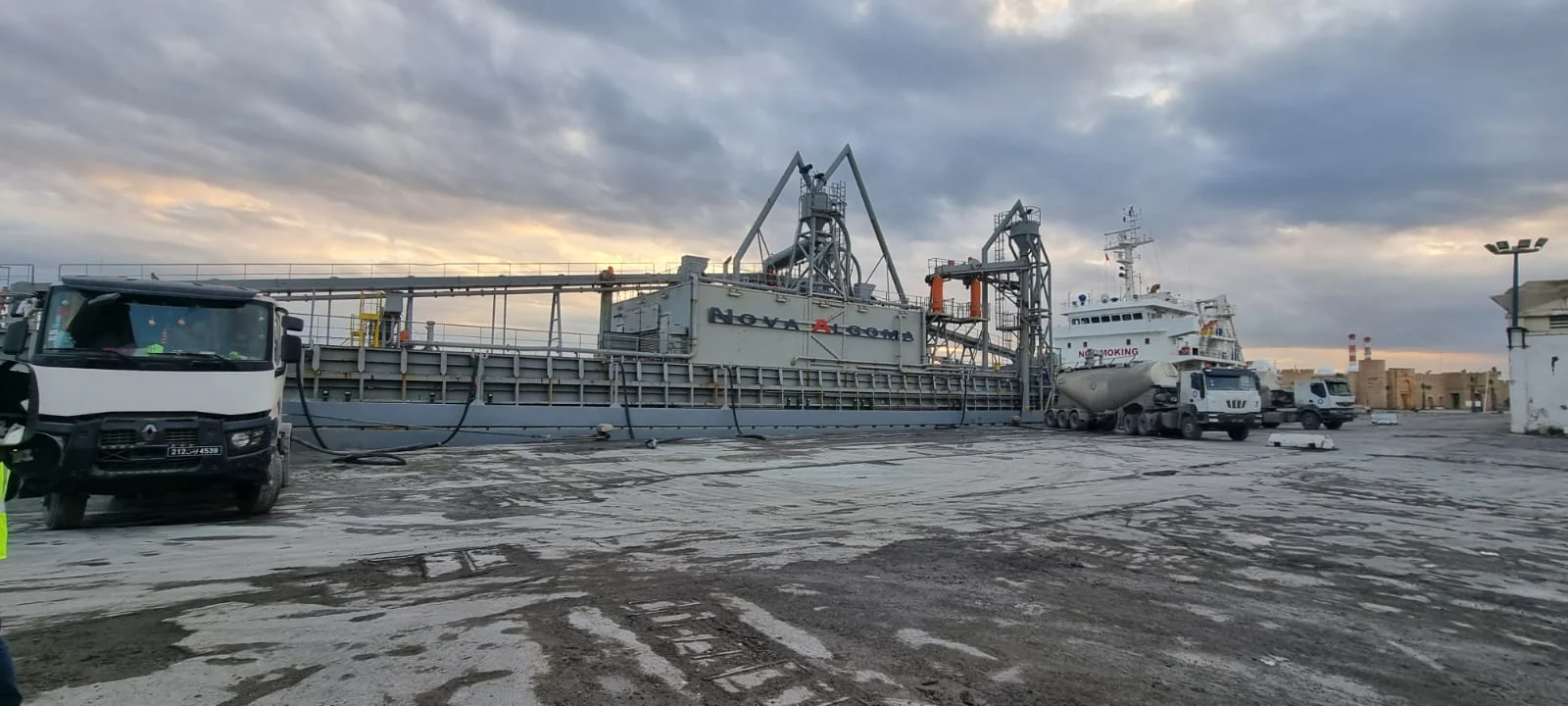
Importing into Zimbabwe from Tunisia: Beira and Durban corridors, CBCA certificate and licences
MWB TRADING offers importers, distributors and companies in Zimbabwe products from Tunisia: cables and equipment for power networks, wiring devices and protection, LED lighting, pipes and fittings for water and irrigation, as well as industrial raw materials. Goods leave from Radès (Tunis) or Sfax; our offers are made delivered to the transit port, Beira or Durban, on CFR or CIF terms, in full 20 or 40-foot containers or as groupage for small volumes.
This guide sets out the verified points for importing into Zimbabwe, a landlocked country: the Beira and Durban corridors, the CBCA certificate of conformity issued before shipment for regulated products, the declaration in ASYCUDA World with the Zimbabwe Revenue Authority, the import licensing regime, the COMESA free trade area, and what to state in your enquiry.
the two main transit ports; Beira, in Mozambique, offers the shortest sea route, through the Forbes–Machipanda border; from Durban, entry through Beitbridge
CBCA certificate
certificate of conformity issued before shipment for regulated products and required for customs clearance; current programme in place since 1 August 2025
Import licence
most goods enter under the Open General Import Licence (OGIL); others need a licence from the Ministry of Industry and Commerce
COMESA
free trade area that includes Tunisia and Zimbabwe: preference possible with a COMESA certificate of origin, to be confirmed; Tunisia is not a SADC member
Radès · Sfax
our departure ports in Tunisia
CFR · CIF
offers made delivered to the transit port, in 20 or 40-foot containers or as groupage; FOB on request
Sources: US Department of Commerce country guide (March 2026), Zimbabwe Revenue Authority (customs clearance procedures, consulted in October 2026), inspection bodies appointed for the CBCA programme (Cotecna, March 2024; Intertek and Bureau Veritas, July and August 2025; Bureau Veritas, April 2026), Zimbabwean press (May 2025, April and July 2026), TradeMark Africa (July 2026), MSC (October 2026), Logistics Cluster, COMESA Secretariat (2020), SADC. Checked in October 2026; to be confirmed with your freight forwarder before each shipment.
PRODUCT RANGES
The ranges we offer for Zimbabwe
These ranges from the MWB catalogue are available from Tunisia for delivery to Zimbabwe. References, required standards and quantities are confirmed in each offer; for regulated products, plan the CBCA certificate before shipment.
Electrical cables and wires
Low and medium-voltage power cables, control cables, building wires and cables. Electrical products are among the categories of the CBCA programme: state the cross-sections in mm², the drum lengths and the required standard.
MV/LV distribution transformers, packaged substations and medium-voltage switchgear for networks, industrial sites and mines. State the rating, primary and secondary voltages and the type of installation.
LED lamps, luminaires and street lights for buildings, roads and sites, with the technical data sheet of each model. Luminaires were added in 2024 to the list of products requiring a CBCA certificate.
HDPE and PVC pressure pipes for water supply and irrigation, PVC drainage pipes, PPR pipes and fittings for plumbing. State the diameters, pressure ratings and lengths.
Raw materials for detergents and paints, polymers and industrial chemicals. State the grade, particle size and packaging; chemicals and plastics are among the categories of the CBCA programme.
Zimbabwe has no access to the sea. From Tunisia, containers arrive, with transhipment depending on the shipping line, at Beira, in Mozambique, or Durban, in South Africa, the two main ports serving the country. Beira offers the shortest sea route: almost all of its traffic with Zimbabwe crosses the Forbes–Machipanda border, near Mutare, then reaches Harare by road or rail. From Durban, goods enter Zimbabwe through Beitbridge, the main border post with South Africa. Our offers are made delivered to the transit port; onward transport to Harare, Bulawayo or the delivery point is arranged with your freight forwarder.
Import documents
The import declaration is lodged in ASYCUDA World, the online system of the Zimbabwe Revenue Authority (ZIMRA), by a licensed clearing agent or by the registered importer, who needs a Business Partner Number activated for customs; ZIMRA encourages importers to use a clearing agent. Supporting documents are scanned and attached online: supplier invoices, value declaration, bill of lading, freight and insurance statements, certificate of origin when a preference is claimed, permit or licence for controlled goods and a copy of the importer’s tax clearance certificate. Most goods enter under the Open General Import Licence (OGIL); others need a licence from the Ministry of Industry and Commerce. A 2026 regulation consolidated and tightened this regime, notably for cement, steel and some construction materials. MWB prepares the commercial invoice, packing list, certificate of origin and technical data sheets for the shipment.
Inspection and conformity
Since 2015, Zimbabwe has applied a Consignment Based Conformity Assessment (CBCA) programme, run by the Ministry of Industry and Commerce with ZIMRA; the current programme has been in place since 1 August 2025. For a regulated product, the exporter applies before shipment, in the exporting country, for a certificate of conformity from one of the appointed inspection bodies, including Bureau Veritas, Cotecna and Intertek: document check, inspection and, where needed, laboratory testing. The certificate is required for customs clearance. The list of regulated products covers building materials, electrical and electronic products, chemicals, plastics and packaging, among others; in 2024 it was extended to luminaires and electrical boards, among other items. Under the 2024 text, some products are covered only above a value threshold: have each item checked before shipment. Regulated goods arriving without a certificate face a destination inspection, penalties or even refusal of entry. The Standards Association of Zimbabwe (SAZ) is the national standards body.
What to specify
State the delivery city in Zimbabwe and the preferred transit port, Beira or Durban, with the references, quantities and required standards. Say whether your products fall under the CBCA programme or need an import licence, whether several product families can share the same container, whether you want a CFR, CIF or FOB offer, and who arranges transport from the port. Before ordering, agree the payment terms for the import with your bank.
Availability, transport, lead times and documents are confirmed in each offer.
YOUR ENQUIRY FOR ZIMBABWE
Let’s prepare your offer for Zimbabwe.
State your products, quantities, delivery city and preferred transit port. Zimbabwe is already selected; you can change it.
Your questions about importing into Zimbabwe from Tunisia
What is the CBCA certificate and when should it be requested?
It is the certificate of conformity of the Consignment Based Conformity Assessment (CBCA) programme. For a regulated product, it is requested before shipment, in the exporting country, from an inspection body appointed by the Ministry of Industry and Commerce, such as Bureau Veritas, Cotecna or Intertek, which checks the documents, inspects the goods and may have them tested. It is required for customs clearance. MWB prepares the commercial invoice, packing list, certificate of origin and technical data sheets for the shipment.
Is an import licence required?
Most goods enter under the Open General Import Licence (OGIL), without an individual licence. Others need a licence from the Ministry of Industry and Commerce, whose original is presented at clearance. A 2026 regulation consolidated and tightened this regime, notably for cement, steel and some construction materials; a licence can be refused for products that do not meet national standards. Ask your freight forwarder to check each product before ordering.
Do Tunisian products qualify for a tariff preference?
Zimbabwe and Tunisia are both part of the COMESA free trade area: in 2020, the COMESA Secretariat stated that Tunisian products could enter the member states of the area, including Zimbabwe, free of import duty. ZIMRA applies COMESA preferential rates when the required certificate of origin is attached; in Tunisia, it is issued by customs or a chamber of commerce. Tunisia is not a SADC member. Ask your freight forwarder to confirm that the preference applies to Tunisian origin before ordering.
Which port should the goods go through?
Through Beira, in Mozambique, the shortest sea route, then the Forbes–Machipanda border near Mutare; or through Durban, in South Africa, then the Beitbridge border. Our offers are made delivered to the transit port, on CFR or CIF terms, from Radès (Tunis) or Sfax; FOB departure is possible on request. Onward transport to Harare or Bulawayo is arranged with your freight forwarder.
Can you group several products or ship small quantities?
Yes: several product families can be grouped in the same 20 or 40-foot container, and small volumes travel as groupage. For an urgent need for small quantities, air freight from Tunis-Carthage is possible on request.